How to Plan a Stress-Free Wedding Photography Timeline in Thanjavur: Essential Tips for Couples to Capture Every Special Moment
· By Admin
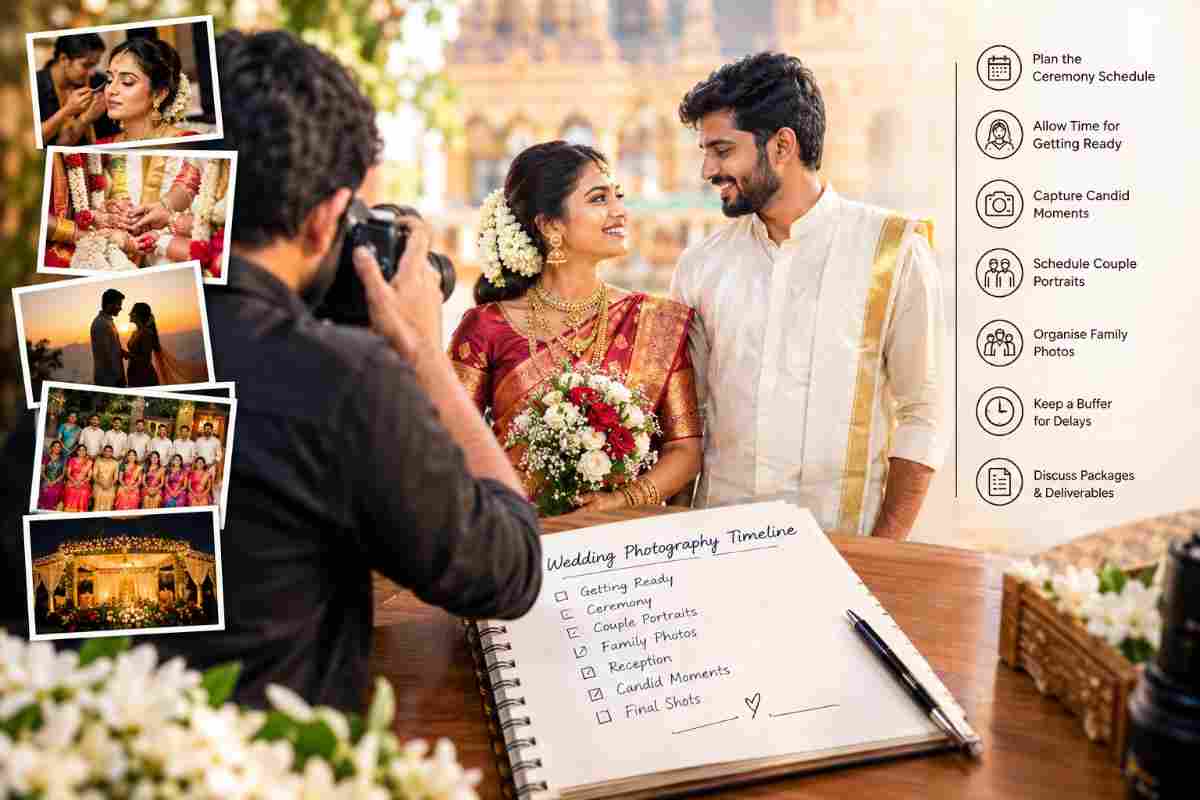
A wedding is filled with beautiful moments, from getting ready in the morning to exchanging garlands, performing traditional rituals, and celebrating with family and friends. However, without proper planning, it can be difficult to capture every important detail while keeping the day relaxed and enjoyable.
For couples planning a wedding in Thanjavur, creating a well-organised photography timeline can make a significant difference. With the right preparation and professional wedding photography, you can preserve the emotions, traditions, and memories that make your special day unique.
Right Click Photography, Thanjavur, helps couples preserve meaningful occasions through wedding photography, candid photography, portraits, and professionally prepared wedding albums. Here is how to plan a wedding photography timeline that works for your celebration.
Why Is a Wedding Photography Timeline Important?
A wedding photography timeline is a schedule that outlines when important photographs and events should take place. It helps couples, families, photographers, and wedding coordinators understand the day's priorities.
Without a timeline, couples may feel rushed between makeup sessions, ceremonies, group photographs, and venue changes. Important details may also be overlooked when several activities happen simultaneously.
A well-planned timeline helps you:
- Capture important wedding rituals without unnecessary interruptions.
- Allow enough time for couple portraits and family photographs.
- Coordinate photography with makeup artists, decorators, and event organisers.
- Reduce delays caused by travel between locations.
- Enjoy the celebration without constantly worrying about the next photograph.
For traditional Tamil weddings in Thanjavur, where auspicious timings and specific rituals are important, planning photography around the ceremony schedule is particularly useful.
1. Start with the Wedding Ceremony Schedule
Before planning photography sessions, confirm the wedding day's main events.
Discuss the schedule with your family, wedding planner, or priest to understand when important rituals will take place. Traditional Tamil weddings may include the arrival of the bride and groom, welcoming ceremonies, the maalai maatral garland exchange, the kanyadaanam ritual, the mangalya dharanam or tying of the thali, and other family-specific customs.
Not every wedding follows the same sequence, so create a schedule based on your actual ceremony.
Share Important Timings with Your Photographer
Provide your photographer with the confirmed timings for the main rituals, including any changes communicated by the family or venue.
This helps the photography team prepare for important moments rather than reacting at the last minute.
For ceremonies with strict auspicious timings, prioritise those events when creating the schedule. Allow additional time for preparation and movement between locations.
2. Schedule the Getting-Ready Photography Session
The getting-ready session captures the excitement and anticipation before the ceremony begins.
Photographs may include the bride's makeup, jewellery, wedding attire, the groom getting dressed, family members helping with preparations, and close-up shots of meaningful accessories.
These details often become valuable parts of a wedding album because they tell the story of the day from the beginning.
Planning tip: Keep the wedding outfits, jewellery, invitation, footwear, and other important accessories organised in advance. This allows the photographer to capture detail shots efficiently.
If you want natural, candid photographs, allow time for genuine interactions rather than asking everyone to pose continuously.
3. Plan Enough Time for Candid Wedding Photography
Candid wedding photography focuses on natural emotions and interactions rather than only formal poses.
A parent's emotional expression, friends laughing during preparations, the couple exchanging a glance, or relatives celebrating after a ceremony can become some of the most memorable wedding photographs.
To help your photographer capture these moments, avoid filling every minute with scheduled activities.
Allow some flexibility around the main events so the photographer can document spontaneous interactions.
Combine Candid and Traditional Photography
Both styles have an important role in wedding coverage.
- Traditional photography: Ideal for family group portraits, key rituals, formal couple photographs, and essential ceremony moments.
- Candid photography: Captures natural expressions, interactions, behind-the-scenes moments, and the atmosphere of the celebration.
Discuss your priorities with your photography team before the wedding. This helps establish which moments require formal coverage and where a more natural approach is suitable.
Right Click Photography offers wedding and candid photography services for couples who want to preserve both the important traditions and genuine emotions of their celebration.
4. Set Aside Time for Couple Portraits
Couple portraits are an important part of a wedding photography collection. However, they should not interfere with essential ceremonies or create unnecessary pressure.
Choose a suitable time based on your wedding schedule, venue, lighting conditions, and personal preferences.
For example, an early-morning session may work well for a morning wedding, while a short portrait session during a break may suit a longer celebration.
Choose Locations in Advance
Thanjavur offers a range of possible wedding photography settings, depending on your venue and preferences. These may include decorated wedding halls, landscaped outdoor spaces, heritage-inspired surroundings, or simple backgrounds that keep the focus on the couple.
Confirm that photography is permitted at your selected location and consider travel time if you plan to leave the main venue.
You do not need an elaborate location to create beautiful portraits. Thoughtful lighting, natural expressions, and a comfortable environment can make a significant difference.
5. Organise Family and Group Photographs
Family photographs are often among the most treasured parts of a wedding album. They bring together relatives and friends who may not have another opportunity to gather in the same way.
However, organising large groups can take longer than expected, especially when guests are moving between different areas.
Prepare a Family Photo List
Create a short list of essential combinations before the wedding. It might include:
- The couple with both sets of parents.
- The couple with siblings.
- The couple with grandparents.
- Immediate family group photographs.
- Close relatives and important family groups.
- Friends and colleagues, if desired.
Ask a trusted family member to help gather people for each photograph. This reduces confusion and allows the photographer to concentrate on capturing clear, well-composed images.
Avoid scheduling every possible combination if time is limited. Prioritise the photographs that matter most to you and your family.
6. Allow Buffer Time for Delays
Even a carefully planned wedding schedule can change. Makeup may take longer than expected, guests may arrive late, ceremonies may run over time, or travel between venues may be affected by traffic.
For weddings in Thanjavur and surrounding areas, consider the distance between the preparation location, wedding venue, and reception hall when setting your schedule.
Build short buffer periods into the timeline instead of planning every activity back-to-back.
A practical approach is to discuss likely delays with your wedding coordinator and photography team before finalising the schedule.
If the ceremony is delayed, prioritise essential rituals and family photographs rather than rushing every remaining activity.
7. Plan Photography Around Lighting and Venue Conditions
Lighting influences the appearance and quality of wedding photographs.
Indoor wedding halls may have a mixture of decorative lighting and limited natural light, while outdoor venues may have changing sunlight throughout the day.
Discuss the venue layout with your photographer in advance. Share photographs of the hall, stage, ceremony area, and planned portrait locations if possible.
For outdoor couple portraits, your photographer can suggest a suitable time based on the location and weather. For indoor ceremonies, professional lighting equipment and careful positioning can help manage challenging conditions.
If you are planning drone photography, confirm venue permission, applicable flight restrictions, weather conditions, and safety requirements in advance.
8. Coordinate Photography with Other Wedding Services
Wedding photography works best when it is coordinated with the wider event schedule.
Speak with your makeup artist, decorator, event organiser, and venue team before the wedding. Let them know when photography sessions are planned and identify any activities that need to happen before the ceremony.
For example, if you want photographs of the decorated wedding stage before guests arrive, schedule a short window for those images before the venue becomes crowded.
Similarly, inform the photography team about surprise performances, special family announcements, or planned celebrations so they can prepare to capture them.
Clear communication helps reduce last-minute confusion and makes the day more enjoyable for everyone.
9. Discuss Your Photography Package Before the Wedding
Before confirming a wedding photography booking, understand what the package includes.
Ask about coverage hours, candid and traditional photography, the number of photographers, video services if required, album options, editing, delivery timelines, and any additional charges.
If you have multiple events, such as a reception, engagement ceremony, or pre-wedding shoot, clarify whether they are included in the package.
It is also useful to discuss how the photographer handles overlapping events, especially when important rituals and guest activities occur simultaneously.
Right Click Photography provides photography services for weddings, pre-wedding shoots, events, portraits, wedding albums, and other special occasions. Couples can explore the available services and discuss their requirements before finalising a suitable arrangement.
Visit the official website: Right Click Photography.
10. Create a Simple Wedding Photography Timeline
Your exact schedule will depend on your ceremony timings, venue, and cultural traditions. The following example illustrates how a morning wedding might be organised.
Photography activity Suggested timing
Getting-ready details Before the ceremony
Bride and groom preparations Before the main rituals
Guest arrivals and candid moments As guests arrive
Main wedding rituals According to the confirmed ceremony schedule
Couple portraits During a suitable break
Family group photographs After the main rituals or at a planned time
Reception and guest interactions During the reception
Final photographs Before the photography coverage ends
Treat this as a planning guide rather than a fixed schedule. Your photographer can help adapt it to your actual wedding arrangements.
Conclusion
A well-planned wedding photography timeline allows you to enjoy your celebration while ensuring that important rituals, family relationships, and genuine emotions are documented. By confirming ceremony timings, allowing flexibility, organising group photographs, and communicating with your photography team, you can reduce stress and make the most of your wedding day.
For couples looking for wedding photography in Thanjavur, Right Click Photography offers services designed to preserve meaningful celebrations through wedding photography, candid moments, portraits, and wedding albums.
Explore the studio's services at rightclickphotographystudio.com or call 9095940308 to discuss your wedding photography requirements.
Tell us about your day.
Get Quote